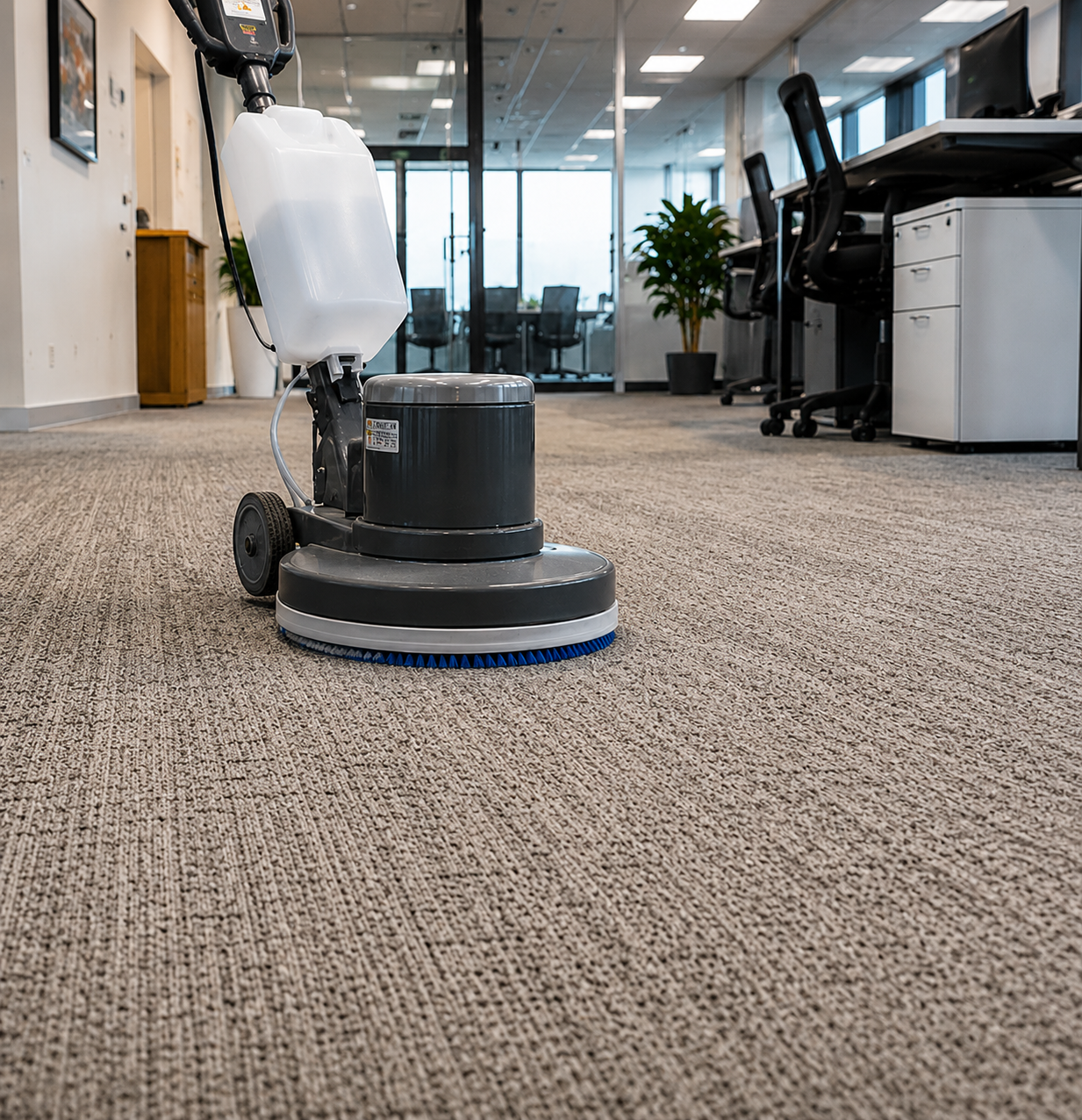
Commercial Carpet Cleaning Methods: Hot Water Extraction vs. Encapsulation
July 24, 2026
Quick Answer: Hot water extraction (often called steam cleaning) is a deep restorative clean that flushes embedded soil out of the pile and down to the backing, with a dry time of roughly 4 to 12 hours. Encapsulation is a low-moisture maintenance clean that wraps surface soil in a polymer that dries and vacuums away, usually within 1 to 2 hours. Most commercial buildings run both on a schedule: encapsulation between visits to keep traffic lanes sharp, and periodic extraction to reset the carpet. The right primary method depends on your traffic, occupancy hours, drying conditions, and how much downtime your operation can absorb.
You manage a building where the carpet takes a beating every single day. Lobby runners, elevator lobbies, corridor turns, the path from the entrance to reception, the lane between cubicle rows. Foot traffic grinds grit into the pile, spills happen, and by the time carpet looks visibly dirty it has usually been soiled for a while. When it comes time to clean it, you are handed method names that sound interchangeable but are not: hot water extraction, encapsulation, bonnet, low-moisture. Pick the wrong one for the situation and you either leave soil in the backing or you leave the carpet wet during business hours. Understanding how the two main commercial carpet cleaning methods actually work, and where each one fits, lets you build a maintenance program instead of reacting to whichever carpet looks worst that week.
How Hot Water Extraction Actually Works
The mechanics
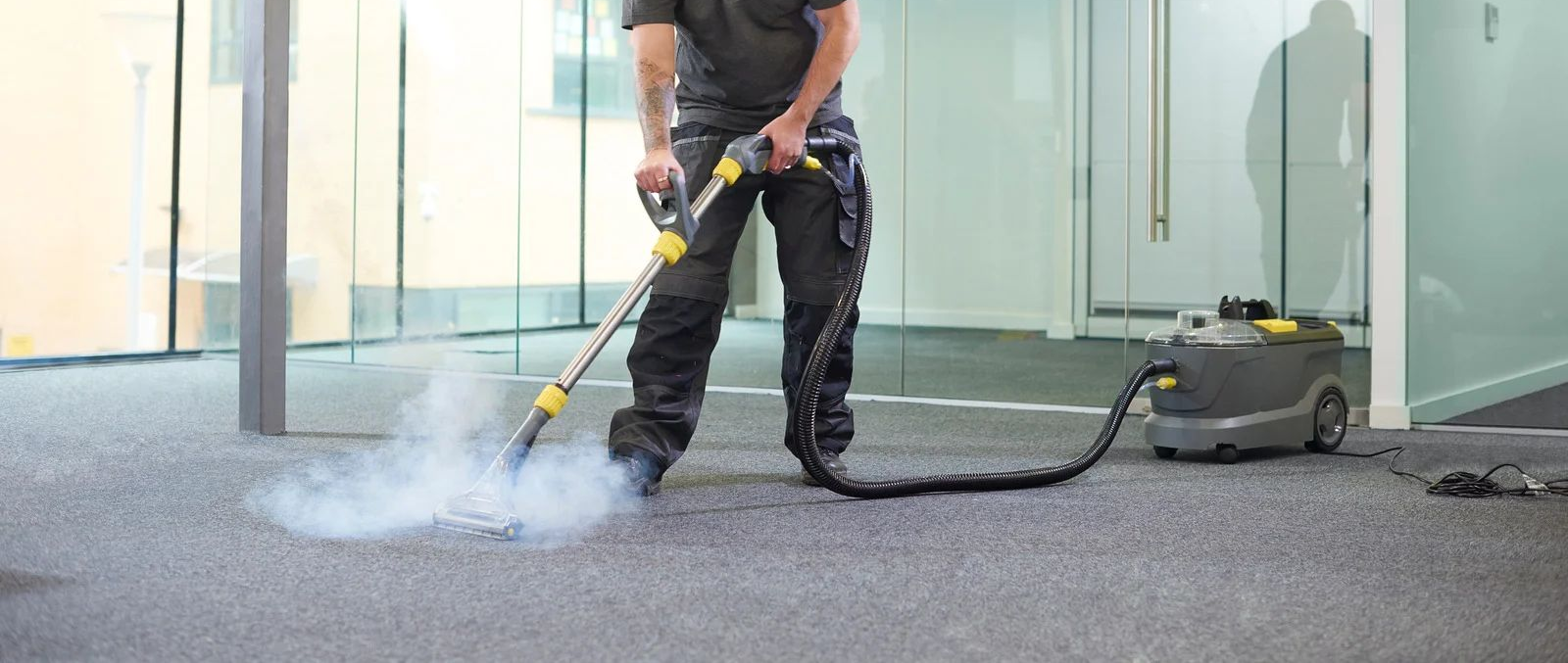
Hot water extraction combines heated water with a cleaning solution, injects it into the carpet under pressure, and immediately vacuums it back out along with the soil it loosened. The heat and agitation break the bond between the soil and the fiber, and the powerful extraction pulls the suspended dirt up and out. Because the process reaches down toward the backing rather than skimming the top of the pile, it is the method that actually deep-cleans.
Why it earns the "restorative" label
Extraction is the closest thing to a reset a commercial carpet gets. It lifts the embedded, ground-in soil that vacuuming and surface methods leave behind, and it is the standard many carpet manufacturers reference for keeping a warranty intact. When a carpet has gone a long stretch without a deep clean, or when it has taken on odor, food, or a biological incident, extraction is the tool that pulls contaminants out instead of pushing them around.
The tradeoff
All that water has a cost, and the cost is time. The carpet stays damp after the job, and how long depends on airflow, humidity, and how dense the pile is. That drying window is the single biggest reason extraction gets scheduled around closures rather than run in the middle of a workday.
How Encapsulation and Low-Moisture Methods Work
The chemistry
Encapsulation uses a polymer cleaning solution that is brushed into the carpet with a counter-rotating cylindrical machine. The polymer surrounds each soil particle and crystallizes as it dries, turning the soil into brittle crystals that detach from the fiber. The next few passes of a regular vacuum lift those crystals away. There is no flooding and no lengthy extraction, which is why the carpet is back in service the same day.
Where bonnet cleaning fits
Bonnet cleaning is another low-moisture option, using an absorbent pad on a rotary machine to wipe surface soil off the top of the pile. It is fast and it freshens appearance quickly, but it works only at the surface and can leave soil deeper in the pile untouched. Think of it as an appearance touch-up for a lobby before a tour, not a substitute for periodic deep cleaning.
What these methods are built for
Low-moisture cleaning is maintenance, not restoration. It shines on traffic lanes and high-visibility areas that need to look consistently sharp between deep cleans. It keeps the appearance of a carpet from sliding while the space stays occupied and open for business, which is exactly what a busy commercial floor needs most of the year.
Dry Time and Disruption to Your Operations
The core difference in downtime
This is where the two methods separate most sharply for a facility manager. Extraction can leave carpet damp for several hours to most of a day. Encapsulation typically dries in an hour or two. If you cannot take an area out of service, that gap decides which method you can even consider for that visit.
Scheduling around the water
Extraction naturally belongs on nights, weekends, holidays, or planned shutdowns, because you need the drying window to clear before people walk on it again. Encapsulation slots into occupied buildings and 24/7 operations where coordinating a full closure is impractical. In a multi-tenant tower, getting every tenant to agree on downtime is its own project, and low-moisture cleaning sidesteps that.
TIP: Map your carpet plan to your building calendar before you book anything. Reserve extraction for the long weekends and seasonal lulls when the space is empty anyway, and use low-moisture cleaning to carry appearance through the busy stretches in between. That single scheduling habit removes most of the friction between clean carpet and open doors.
Soil Removal Depth and Traffic-Lane Fit
Matching method to soil load
Encapsulation handles surface and traffic-lane soil well, but it has a ceiling. Once soil is packed deep in the pile and into the backing, a low-moisture pass will not reach it, and repeated encapsulation without a periodic deep clean lets residue and soil quietly accumulate. Extraction is what clears that deep load.
Reading your own floor
Different zones in the same building carry different soil. Entrances and elevator lobbies act as soil filters and load up fast. Private offices and low-traffic conference rooms stay clean far longer. A smart program cleans to that reality: frequent low-moisture attention on the lanes that show wear, and full extraction across the whole floor on a periodic cycle so nothing gets permanently ground in.
Why the combined cycle wins
Most commercial buildings land on a hybrid rhythm because neither method does the whole job alone. Extraction resets the carpet and satisfies the deep-clean requirement, while encapsulation keeps the high-visibility areas looking maintained in between. Independent testing programs such as the Carpet and Rug Institute's Seal of Approval measure equipment on soil removal, surface appearance, and residual moisture, which is a useful reminder that the equipment and solution behind either method matter as much as the method name on the invoice.
The Green and Indoor Air Quality Angle
Carpet is an air quality factor, not just a floor
Carpet acts as a sink that traps dust, allergens, and particulates pulled in on shoes and settling from the air. When cleaning is done well, that trapped load gets removed, which supports healthier indoor air. When it is done poorly, moisture and residue left behind can work against air quality instead. The method and the follow-through both matter.
Why solution choice belongs in the conversation
A real green approach pairs the right method with low-toxicity, certified cleaning solutions and equipment engineered for efficient water use and thorough recovery. Low-moisture encapsulation uses less water by design, which appeals to buildings watching resource use, while modern extraction equipment is built to pull more water back out so less is left behind. Certifications like Green Seal and the EPA's Safer Choice help you verify that the products touching your carpet meet real environmental standards rather than marketing claims.
The green-building tie-in
For facilities pursuing or maintaining LEED and other sustainability frameworks, carpet care is part of a documented green cleaning program. Method selection, product certification, and water efficiency all feed that story. Matching your carpet maintenance to those standards keeps your building's environmental commitments consistent all the way down to the floor.
How to Choose by Facility Type
Offices and corporate floors
A standard office does well on the combined cycle: low-moisture encapsulation on a regular interval to hold traffic lanes, plus periodic extraction scheduled around a holiday or slow week to reset the whole floor.
24/7 and high-occupancy operations
Facilities that never fully close lean heavily on low-moisture methods for routine upkeep, because there is rarely a window long enough for extraction drying. Deep cleans get planned carefully around the rare quiet period.
Multi-tenant towers
When downtime is hard to coordinate across tenants, encapsulation keeps common areas presentable without forcing a building-wide shutdown, and extraction gets reserved for negotiated closures.
Showrooms, lobbies, and high-visibility spaces
Appearance-critical areas benefit from frequent low-moisture attention so they always look their best, with deep extraction on a periodic schedule to prevent long-term soil buildup underneath the shine.
FAQs
Is hot water extraction the same as steam cleaning?
In everyday use, yes. Hot water extraction pushes heated water and solution into carpet, then vacuums it out. True vapor steam is different but rarer. Commercially, both terms usually mean this same deep-clean method.
How often should commercial carpet be deep cleaned?
It depends on traffic, but commercial carpet benefits from periodic deep extraction, with low-moisture maintenance cleaning more often between cycles. High-traffic entrances need far more attention than private offices. Walk your soil patterns to set the right interval.
Can encapsulation replace deep cleaning entirely?
No. Encapsulation maintains appearance and controls surface soil well but works mainly near the top of the pile. Soil still settles deep into backing over time, and only extraction reaches it. Encapsulation extends time between deep cleans, not eliminates them.
Which method is better for allergens and dust concerns?
Deep extraction removes the most embedded particulate, supporting air quality when carpet dries properly. Regular low-moisture cleaning and frequent vacuuming between deep cleans keep surface load down. Combined with certified low-toxicity solutions, this approach helps indoor air quality most.
Will these methods work with a green or LEED cleaning program?
Yes. Both methods run with certified low-toxicity solutions and water-efficient equipment fitting a documented green cleaning program. Low-moisture encapsulation uses less water by design, and certifications like Green Seal and Safer Choice let you verify products meet environmental standards.
How long does carpet need to dry before people walk on it?
Encapsulation is usually walkable within one to two hours. Hot water extraction can take several hours to most of a day, depending on airflow, humidity, and pile density. During damp Bay Area winters, plan for the longer end and add air movement.
Putting It Together for Your Building
There is no single best commercial carpet cleaning method, only the right method for a given area, season, and schedule. Extraction is your deep reset and the answer for embedded soil, odor, and warranty upkeep, as long as you can give the carpet time to dry. Encapsulation and other low-moisture methods keep traffic lanes and high-visibility spaces looking maintained while the building stays open, which is what carpet needs most of the year. Layer them into a program built around your traffic patterns, your occupancy hours, and the wet-winter realities of the Bay Area, and you get carpet that looks professional year-round without turning every cleaning into an operational headache. Pair that program with certified green solutions and efficient equipment, and it supports your air quality and sustainability goals at the same time.
Ready to build a carpet maintenance program matched to your facility's traffic, schedule, and green-building goals? Reach out to All-Ways Green Services. Based in Berkeley, California, with 30
years of experience, we'll help you plan an approach that keeps your floors sharp and your operations running.