Removing Set-In Stains and Traffic Lanes From Office Carpet
September 14, 2026
Quick Answer: A set-in stain is different from a fresh spill on a chemical level. Once a spill dries, the liquid evaporates and leaves behind a concentrated residue that bonds to the carpet fiber, and any dye or protein in that residue can oxidize and darken the longer it sits untouched. Traffic lanes form through a separate mechanism entirely: foot traffic grinds gritty, abrasive soil into the pile while oily residue from shoes and skin coats the fibers, and the combination scatters light differently than clean carpet, which is what reads as a dull gray path. Routine vacuuming and surface spot cleaning cannot resolve either problem because both live below the surface, in the fiber and near the backing. Office carpet stain removal that actually works matches the chemistry to the type of soil, applies controlled agitation and dwell time, and finishes with real extraction so residue does not stay behind to attract new soil.
You walk the same hallway to the break room every day, and at some point you stopped seeing the path worn into the carpet along the way. Then a client tour reroutes through that hallway, and suddenly the gray lane between the lobby and the conference room is the only thing anyone notices. Somewhere near it sits a coffee stain from a meeting three months back that a well-meaning employee tried to blot out with a paper towel and water, and it only spread and darkened. Both problems look similar from a distance. They are not the same problem, and treating them the same way is why so many facilities end up with carpet that looks perpetually tired no matter how often someone runs a vacuum over it.
Why a Stain "Sets" Into Office Carpet in the First Place
A Fresh Spill And A Set-In Stain Are Chemically Different Events
When coffee, wine, or ink hits carpet, water carries dissolved color and solids into the fibers. Quick blotting removes of that liquid. Left untreated, water evaporates while dye, sugar, or protein remains, settling deeper. Air exposure can also oxidize coloring agents, making stains progressively darker.
Soil Falls Into Two Rough Categories, And They Need Different Treatment
Sand, dirt, and dried food particles generally respond to water and agitation, making them easier to remove. Oils, grease, and wax resist water and require solutions designed to break their bond with carpet fibers. A juice spotter may fail completely on grease because the chemistry does not match.
Time Is The Variable Most Facilities Underestimate
A spill treated within an hour is a surface problem. After a week of foot traffic, repeated pressure can push residue deeper into the carpet and pad. That makes a stain set in, and explains why treatment timing often matters more than the product chosen.
What Actually Makes a Traffic Lane Different From a Dirty Patch
A traffic lane is not one stain repeated many times. It's an accumulation problem with two separate mechanisms running at once, and neither one shows up from a single spill.
Abrasive Wear Does Physical Damage That Cleaning Alone Cannot Undo
Repeated foot traffic grinds grit against carpet fibers like microscopic sandpaper, scratching and fraying their surfaces. This damage scatters light, creating a dull appearance that resembles soil. Once fibers are physically worn, extraction cannot restore them; replacement or specialized fiber restoration may be necessary.
Oily Film Is The Part Of The Lane That Professional Treatment Can Reverse
Skin oils, lotions, and airborne grease coat carpet fibers, trapping fine dust that routine vacuuming misses. This oily buildup creates the dull, gray appearance associated with traffic lanes. Unlike abrasion damage, it is primarily a soil problem, meaning appropriate cleaning chemistry and methods can significantly improve appearance.
Reading A Lane Correctly Changes How You Treat It
A traffic lane covered mainly by removable gray film should respond well to targeted cleaning. If the carpet remains dull immediately after thorough cleaning, abrasion has likely altered the fibers. Repeated cleaning will not reverse physical wear and may only create unnecessary effort without meaningful improvement.
Identifying What You're Dealing With Before You Treat It
Protein-based stains come from coffee with cream, blood, food, or bodily fluids, and they respond to enzyme-based or mildly alkaline treatments that break down organic matter. Hit them with the wrong acidic product and the protein can actually set harder instead of lifting.
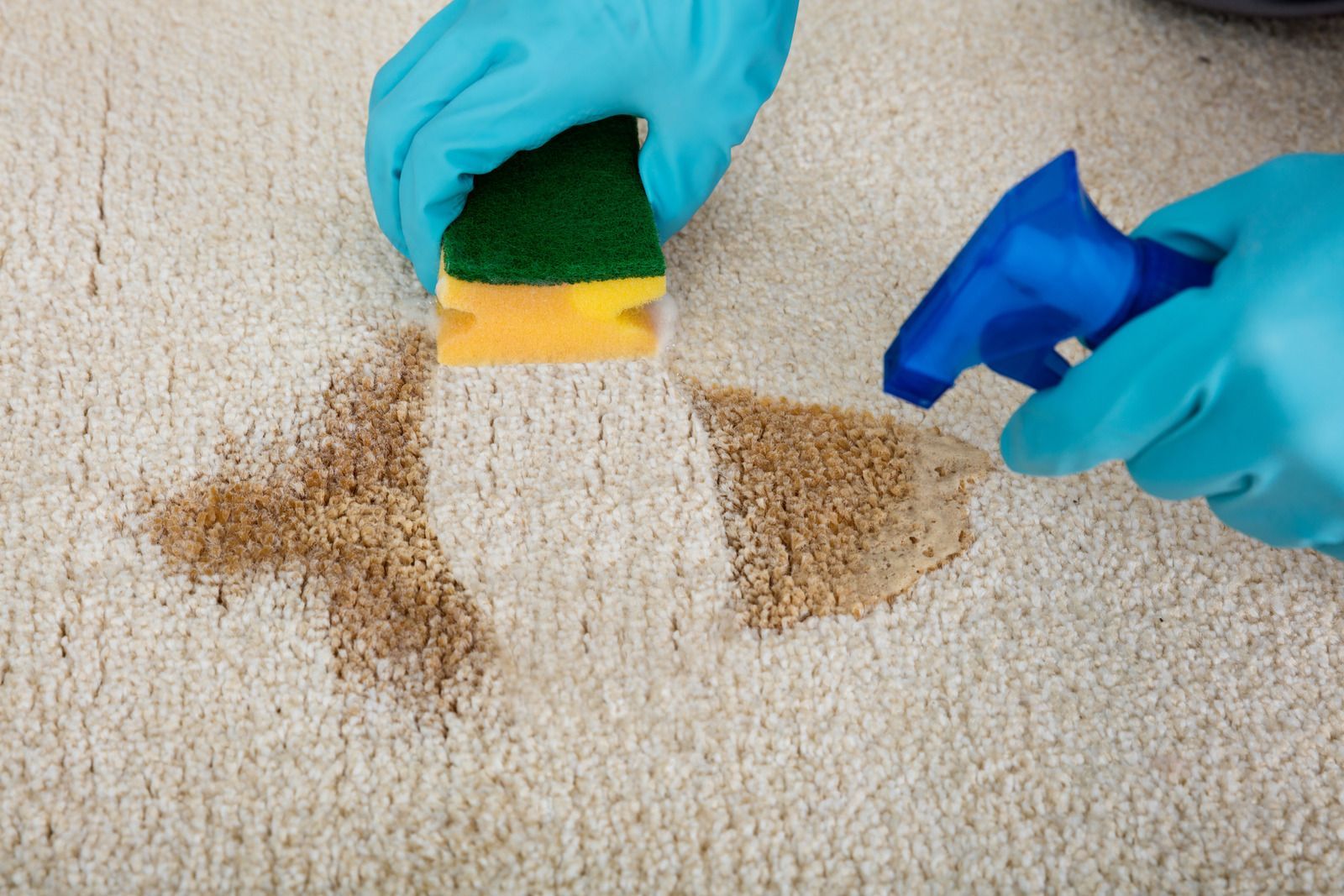
Tannin-based stains cover coffee, tea, wine, and most fruit juices. These typically respond to a slightly acidic approach, and the biggest risk is a well-meaning employee scrubbing with plain water, which spreads the tannin outward into a larger, fainter ring rather than removing it.
Oil and grease-based marks come from cooking grease, hand lotion, shoe polish, and machine or equipment oil tracked in from a loading dock. Water-based cleaners barely touch these; they need a solvent or emulsifying agent that can actually break the oil down before extraction pulls it out.
Dye-based stains, including ink, marker, and some cosmetics, are the ones most likely to permanently alter a fiber's color if handled wrong. These call for the narrowest, most controlled chemistry of the group, because the same solvent strength that removes the dye can also strip color from certain synthetic fibers if it's left on too long.
Guessing at the category and reaching for a general-purpose spotter is how a small, contained stain becomes a bigger, blurrier one.
How Professional Spot Treatment Differs From What Most Offices Try First
The four factors that actually remove soil
Professional carpet technicians work with a simple rule of thumb: temperature, agitation, chemical action, and time. If one of those four is missing, one of the others has to increase to compensate. A cool cloth with plain water is low on temperature and chemical action both, which is exactly why it moves a stain around instead of removing it. Matching the right combination of those four factors to the specific soil type is most of what separates a professional result from a DIY attempt.
pH-matched chemistry instead of one bottle for everything
Most soil found in office carpet is mildly acidic, so an alkaline cleaner is the standard tool for lifting it. But a carpet that's already carrying leftover alkaline residue from a prior cleaning, or a stain that happens to be alkaline itself, needs the opposite: an acidic solution to neutralize it before extraction. Reaching for whatever spotter is under the break room sink skips this step entirely, and mismatched chemistry is one of the most common reasons a stain looks "removed" for a day or two and then reappears.
Extraction that actually pulls residue back out
Applying the right chemical to a stain only does half the job. If the loosened soil and the cleaning solution itself aren't fully extracted, both stay behind in the fiber. Leftover residue acts almost like double-sided tape for new dirt, which is why a spot that was "cleaned" with an incomplete rinse often looks worse within a few weeks than the original stain did.
TIP: When a spill happens in an office setting, blot it immediately with a plain white cloth or paper towel, working from the outer edge toward the center. Never rub. Rubbing pushes the spill deeper into the pad and spreads it wider at the same time, turning a contained, easy fix into a larger job.
Treating Traffic Lanes as Their Own Category
Traffic lanes need a different approach than an isolated stain because the soil is distributed across a wide area and layered rather than concentrated in one spot.
Pre-Treatment Loosens The Oily Bond Before Any Water Touches The Carpet
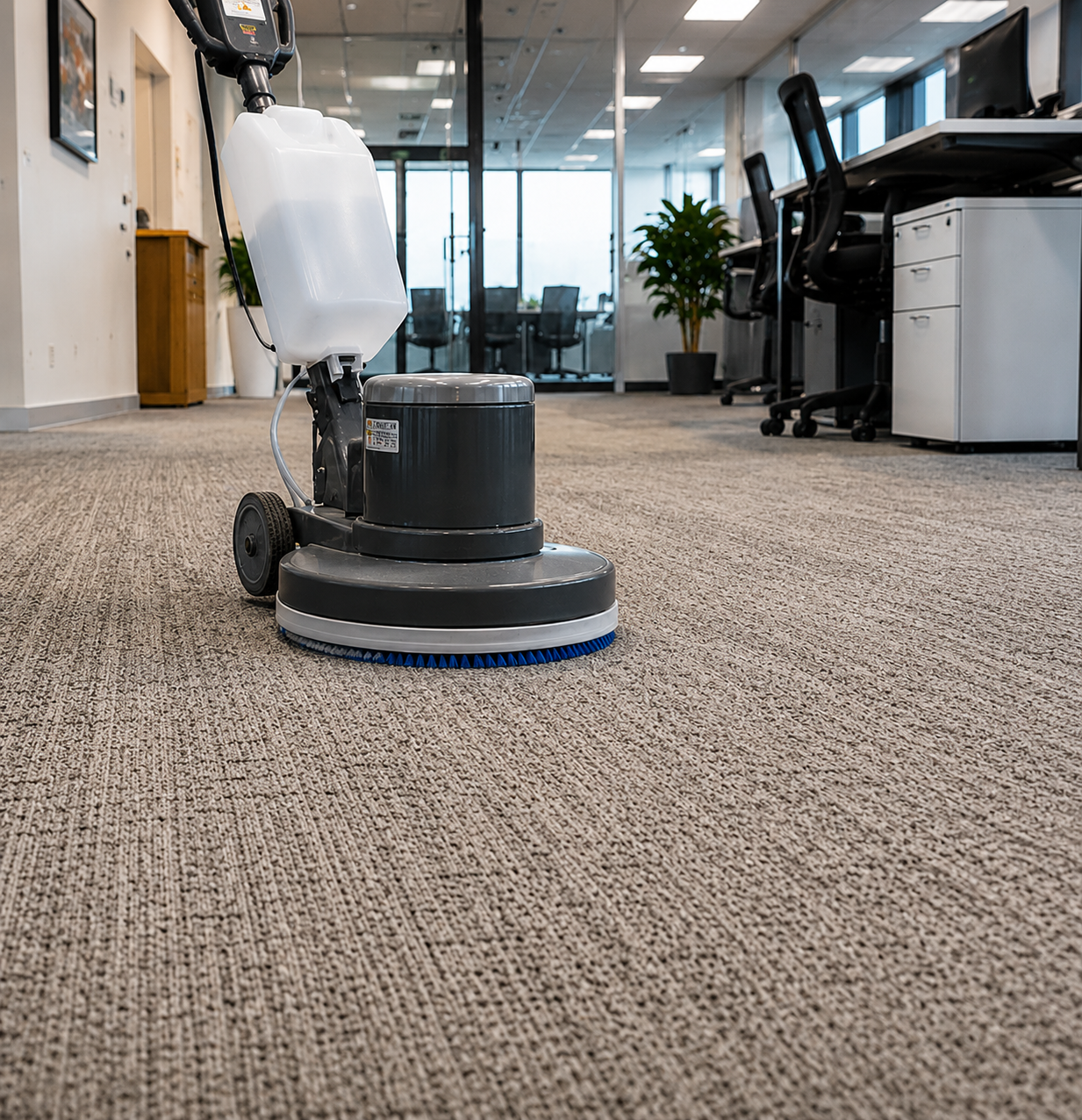
An oil-breaking cleaning solution is worked into the traffic lane and allowed to dwell before extraction. This separates oily soil from carpet fibers first, helping extraction remove loosened buildup instead of simply redistributing it.
Deep Extraction Resets The Section Rather Than Skimming It
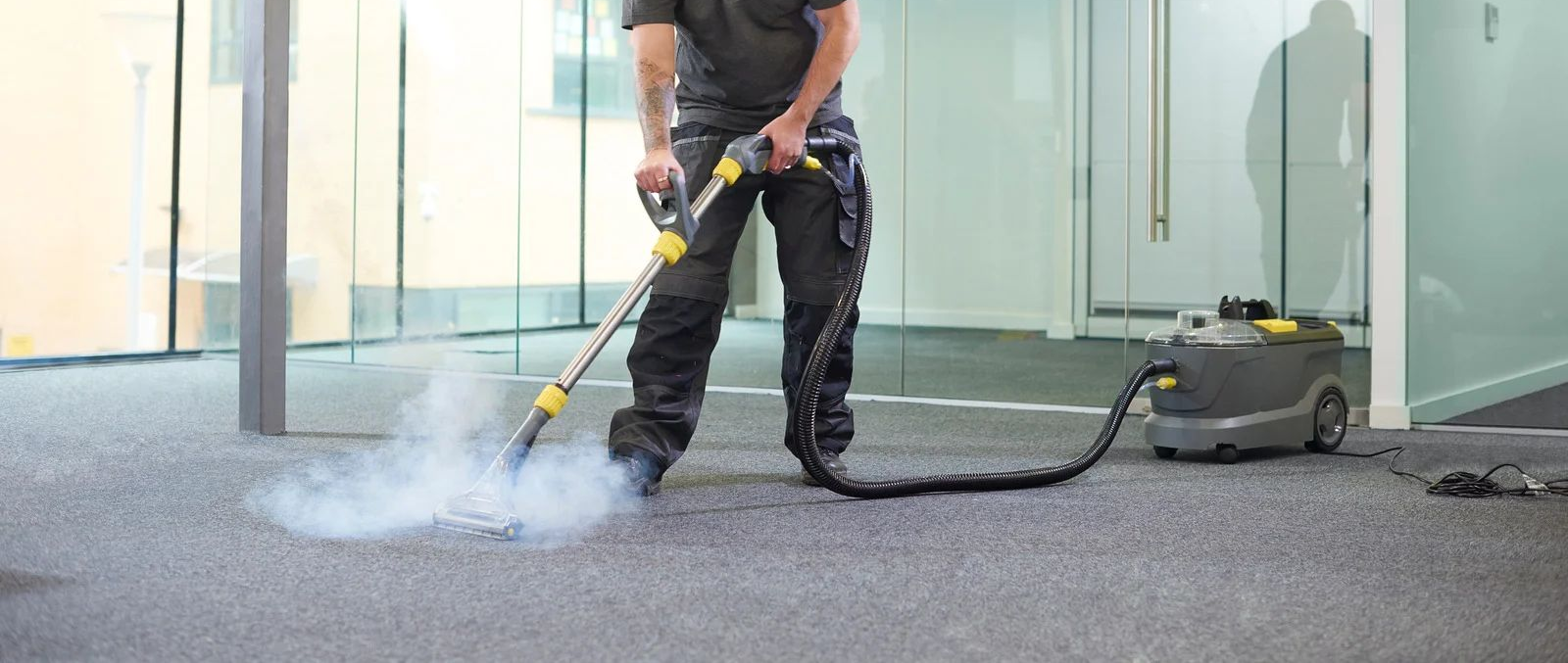
Heated water and cleaning solution penetrate the pile before being immediately extracted with loosened soil. This reaches deeper buildup within traffic lanes, unlike quick surface passes that only lighten the fiber's uppermost layer.
Encapsulation-Style Maintenance Keeps Lanes From Regreying As Fast Between Deep Cleans
Encapsulation solutions surround fine soil particles and crystallize them, allowing routine vacuuming to remove them. Combining periodic deep extraction with lighter maintenance on traffic lanes helps preserve their appearance longer between intensive cleanings.
The Green Chemistry Question for Facility Managers
A genuine eco-friendly approach to office carpet stain removal isn't a marketing label sitting on top of the same chemicals everyone else uses. It shows up in the specific products and process choices a cleaning program makes.
Certified Products Replace Guesswork With A Verifiable Standard
Green Seal and EPA environmental programs evaluate cleaning products against defined criteria for toxicity and environmental impact. Certified solutions provide verifiable documentation when employees, tenants, or auditors ask about carpet-cleaning products.
Low-Toxicity Doesn't Mean Weaker On Oil-Based Traffic Lane Soil
Low-toxicity formulas can use plant-derived surfactants and enzymes to break down oily traffic-lane film. They remove buildup effectively without relying on harsh solvents or unnecessarily aggressive cleaning chemistry during treatment.
Efficient Extraction Equipment Supports Both The Green Angle And Faster Return To Normal Use
Efficient extraction equipment removes more moisture and residue during the first pass, reducing solution use and drying time. This helps treated carpet become walkable sooner, especially within active office environments.
Preventing Stains and Lanes From Reforming So Quickly
A Short Spill-Response Window Changes The Whole Trajectory Of A Stain
Facilities that train staff to blot spills immediately and log spots for follow-up treatment greatly reduce set-in stains. Quick action limits bonding, oxidation, and deeper residue penetration.
Entrance Matting Reduces What Reaches The Lane In The First Place
Well-placed, maintained entrance mats remove significant grit and moisture from shoes before they reach carpeted hallways. This slows traffic-lane formation and reduces staining in busy corridors.
Bay Area Buildings Deal With A Seasonal Wrinkle Worth Planning Around
From roughly November through March, wetter conditions bring more grit and moisture indoors, accelerating staining and traffic-lane formation. Stronger spill response and mat maintenance help limit accumulated damage.
Warning: Consumer carpet spotters and DIY solvent blends can permanently discolor certain carpet fibers, especially wool and some dyed nylon blends, if the chemistry isn't matched correctly. A stain that gets worse or develops a bleached-looking ring after a well-intentioned DIY attempt usually cannot be fully reversed, even by a professional treatment afterward. When a stain looks unusual, or a fiber type is unfamiliar, it's worth pausing before applying anything beyond plain blotting.
FAQs
Can a professional actually remove a stain that's been in the carpet for months?
Often, yes, depending on stain type, fiber, and any prior DIY treatment. Protein and tannin stains usually respond well even after months, though oxidized dye stains are harder to remove.
Why did my carpet look clean right after cleaning, but the traffic lane came back within a few weeks?
This usually points to incomplete extraction. When cleaning solution or loosened soil isn't fully pulled from the fiber, leftover residue attracts new dirt fast, making the area look dirty quickly.
Is there a difference between treating a stain and treating a traffic lane?
Yes. A stain is a concentrated, localized problem that responds to targeted spot chemistry. A traffic lane is distributed soil layered with abrasive grit and oily film needing full extraction.
Should staff try to treat stains themselves before calling in a professional?
Immediate blotting helps and is safe. Beyond that, random spotters or scrubbing can spread a stain deeper into the pad. Blot, log the spot, then schedule professional treatment if needed.
Can eco-friendly cleaning solutions really handle grease and oil in traffic lanes?
Yes. Modern low-toxicity formulas use plant-based surfactants and enzyme systems built to break down oily soil, and certified programs test these products against defined performance and environmental standards, not claims.
Will treating a traffic lane make that section look brand new?
It depends on how much graying comes from oily soil versus fiber wear. Treatment reverses the soil component effectively, but fiber abraded by grit over time can't be fully restored.
Protecting Your Carpet's Appearance for the Long Term
The gray lane by the lobby doors and the coffee ghost near the conference room aren't cosmetic footnotes. They're a record of how people move through a building and what gets tracked in behind them, and treating both categories protects an asset that's disruptive and costly to replace. Once a facility manager can tell a soil problem from a fiber-wear problem, and a fresh spill from a stain that's had weeks to bond and oxidize, the maintenance conversation becomes far more precise.
All-Ways Green Services
has spent 30
years working through exactly these distinctions across Berkeley, CA offices, matching each spot and lane to the chemistry and equipment it actually needs rather than reaching for a one-size approach. That pattern recognition, built through repeated wet Bay Area winters and steady foot traffic, is what separates carpet that looks intentional year after year from carpet that just gets vacuumed and hoped for. The difference tends to show up fastest in the areas everyone walks past without noticing.