How Clean Floors Impact Safety and First Impressions in Commercial Spaces
June 24, 2026
It is a rainy Monday morning. Your first visitor steps through the front doors, and before a word is spoken, their eyes drop to the floor. A streak of dried mud near the mat. A dull, scuffed patch where hundreds of shoes have crossed. Maybe a thin shine of moisture they have to step around. In those few seconds, an opinion forms about your whole operation. And if that wet patch sends a heel sliding, the morning turns into something far worse than a bad first impression.
Here is the part most owners miss. Your floor is the largest surface anyone sees in your space, and it works two jobs at once. It tells every visitor whether you run a tight ship, and it is the surface most likely to put someone on the ground. A clean floor handles safety and reputation in one move. We have walked thousands of commercial spaces, and the floor almost always tells the real story first.
The Two Jobs Your Floor Is Always Doing
Your floor never clocks out. Every hour you are open, it is either earning trust or quietly losing it, and either holding traction or giving it up. Most spaces treat cleaning as a cosmetic chore. In truth, the same grime that dulls a surface is what makes it slick. Fine grit, tracked water, and cleaner residue all cut the grip between shoe and floor. So the dingy look and the slip risk are not two problems. They are one problem wearing two faces.
How a Dirty Floor Turns Into a Slip
Most slips in a commercial space trace back to the front 6 to 10 feet of the entrance. That is where shoes carry in water, oil, and street grit, and where a smooth surface meets a wet sole. Traction lives in a thin contact zone, and it does not take much to break it. A floor finish that was never rinsed out. A greasy residue near a break room. A fine layer of dust on sealed concrete. Any of these can drop grip enough to send someone down, and none of it looks dramatic. During the wet season, rain runs off coats and umbrellas for weeks, so that entry zone stays damp far longer than people expect. The fix is rarely more scrubbing. It is the right cleaner, a real rinse, and matting that pulls moisture off the shoe before it reaches hard floor.
What Your Floor Says Before You Do
A visitor reads your floor in about 3 seconds, long before anyone shakes a hand. Gloss tells one story. Streaks, gray traffic lanes in the carpet, and gritty corners tell another. People rarely think the words this floor is dirty. What lands is a feeling: this place is careful, or it lets things slide. The edges matter more than most expect, since a center aisle gets walked clean while the perimeter collects dust and shows neglect first. A bright, even floor with sharp edges says you sweat the details, and we have watched that one impression shift a room before a meeting even starts.
Where the Trouble Actually Starts
Trouble clusters in a few predictable spots, and the entrance leads the list. The move from outside to inside is where water and grit land hardest, and where matting either does its job or fails it. Grout lines come next. They sit lower than the tile, so they trap moisture and soil and turn into dark veins a surface mop never reaches. Then come the edges, baseboards, and the strip under reception counters, all skipped by a fast pass. Stairs and ramps earn their own care, since a slick nose on a step is far more dangerous than a slick patch on flat ground.
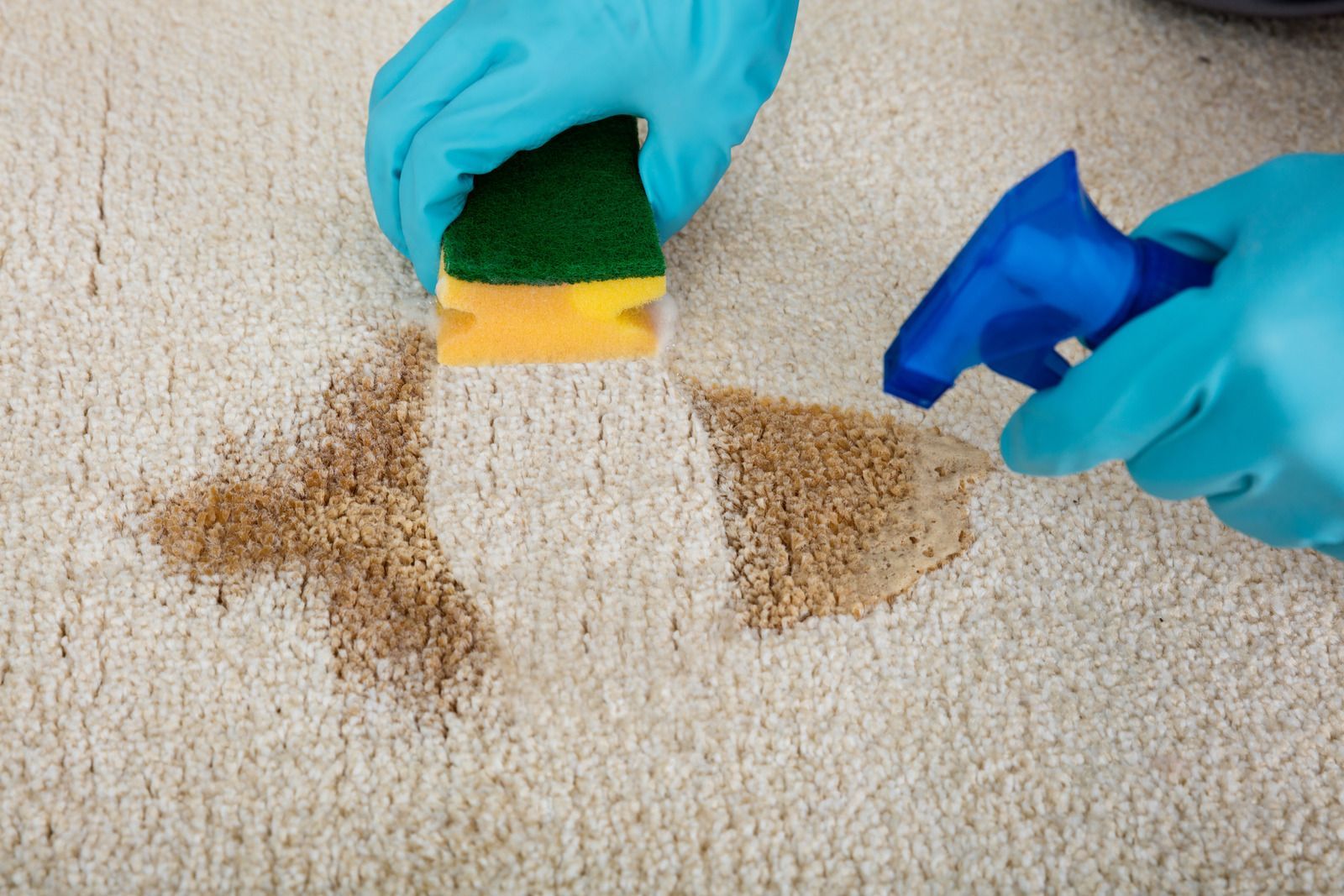
TIP: Drag a clean white cloth along the baseboards and grout near your entry. If it comes up gray or gritty, your floor is holding more soil than a surface mop can lift, and that buildup is what dulls the shine and steals traction.
How We Keep Commercial Floors Safe and Sharp
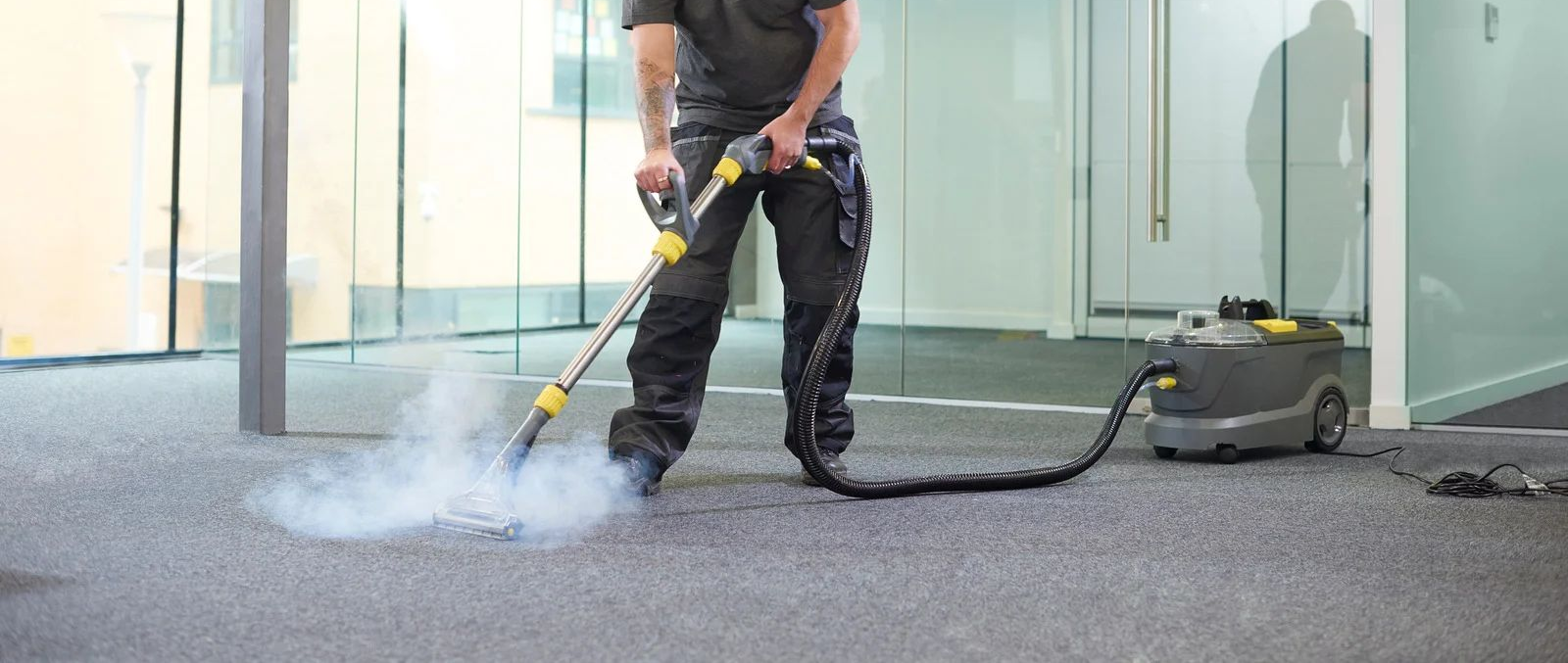
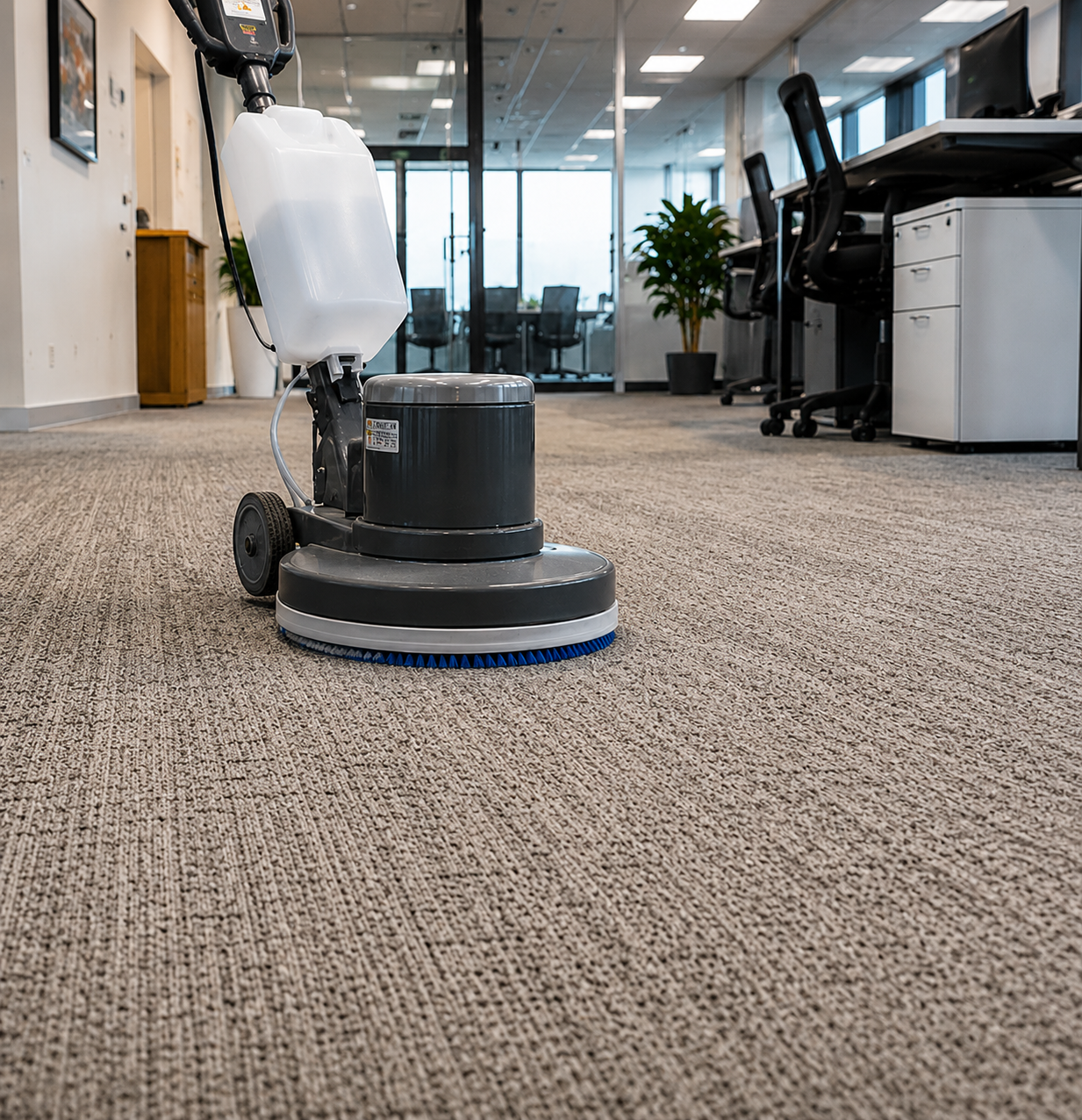
Good floor care follows an order, not a guess. We start by lifting loose soil with a dry pass, because mopping grit into a floor grinds it into a fine scratch pattern that dulls the surface over time. Then the right cleaner for the surface, with enough dwell time to lift soil instead of smearing it, followed by a rinse so no slick film is left behind. On floors that hold a finish, we keep the gloss with regular buffing and recoat wear lanes before they reach bare floor. Mats get cleaned too, since a soaked mat stops catching water and starts spreading it. Through the wet stretch from late fall into spring, we add entrances to the schedule more often, since summer matting cannot keep up once the rain settles in.
WARNING: A freshly mopped or freshly finished floor is one of the most common ways someone gets hurt indoors. Never leave a wet or curing floor open to foot traffic without clear signs and a blocked path. Wet finish stays slick until it fully sets.
Keeping Floors Safe Between Cleanings
A few simple habits hold the line between professional visits. Walk your entrance each morning through the rainy months and dry any tracked water fast, since the first hour of traffic is when most wet floor slips happen. Keep matting long enough to catch several full steps, not a token square at the door, since a shoe needs three or four strides to give up its moisture. Wipe spills the moment they land, before they spread and dry into a sticky film. Once a quarter, study your traffic lanes and edges in real daylight, which shows wear that overhead lighting hides. And sweep or dust mop daily, since loose grit is what wears a finish down fastest.
The Mistakes We See Most Often
The most common mistake is mopping more often with the same dirty water, which smears thinned soil across the whole floor and leaves the film that dulls shine and cuts grip. It feels like cleaning. It is mostly redistribution. Change the water far sooner than feels necessary, or switch to a flat microfiber that lifts soil instead of pushing it. Too much cleaner is the next trap, since a heavy mix dries sticky, grabs dust, and turns slick when damp. And waiting until a floor looks bad to deep clean almost always means waiting too long. By then the wear is set in, and a routine cleaning cannot bring it back.
Frequently Asked Questions
How often should commercial floors be professionally cleaned?
It depends on traffic, but most busy spaces need daily upkeep and a deeper professional clean weekly or monthly. Entrances and wet weather zones need more attention during the rainy season, when tracked moisture builds up far faster, so we adjust the schedule as foot traffic and the seasons shift.
Can clean floors really reduce slip and fall risk?
Yes. Most indoor slips come from water, grit, or leftover cleaner film cutting traction near entrances. Removing that buildup and keeping mats fresh restores grip, so clean floors are one of the simplest ways to lower fall risk. The same care also stops small hazards before anyone feels them underfoot.
Why do my floors look dull right after mopping?
Usually a film. Mopping with dirty water or too much cleaner leaves a thin residue that traps dust and scatters light, so the floor looks hazy. A proper rinse with fresh water brings the shine back fast. Changing your water often and using less product keeps that haze from returning.
Do entry mats actually make a difference?
A big one. Matting is your first line of defense, catching water and grit before they reach hard floors. The catch is upkeep, since a soaked mat stops absorbing and starts spreading moisture, so mats need regular cleaning to keep working. Longer matting at every entrance does the most good.
What makes rainy season the hardest time for floor safety?
Weeks of rain mean constant tracked in water, so entry zones never fully dry and mats saturate quickly. That standing dampness near doors is where most cold weather slips happen, so entrances need more frequent attention through the wet months. We tighten mat care and drying as rain settles in.
Trusted Commercial Floor Care That Keeps Spaces Safe
The simplest rule holds across every commercial space we walk into: a floor that is clean is almost always a floor that is safe, because the same grime that dulls the surface is what steals traction. In our wet Bay Area winters that link gets sharper, since weeks of tracked rain can turn a tidy entrance into a slip risk faster than most owners expect. That is the gap we close. All-Ways Green Services
has cared for commercial floors across Berkeley, California, for 30
years, with green cleaning that keeps your space safe and sharp from the front mat to the back office. We serve Berkley, California, and the surrounding areas. If your floors are due for a reset before the next rainy stretch, reach out, and we will build a plan that fits how your space gets used.